
Ever slam the brakes and feel your car pulse underfoot? That’s your anti-lock braking system (ABS) jumping into action—and it might just save your life.
ABS has been a standard feature in most vehicles since the late 1990s, and for good reason. Whether you’re navigating rainy roads in Georgia or avoiding a sudden stoplight in Florida, ABS helps you brake smarter, not harder.
At Brakes 4 Less, trusted brake service specialists in the Southeast, we believe that the more you know about your braking system, the safer you’ll be. Let’s dive into how ABS works, why it matters, and what signs to look for when it’s time for a check-up.
What Is ABS and What Does It Do?
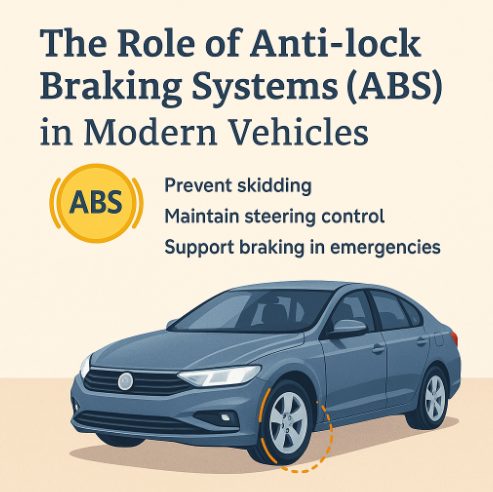
Anti-lock braking systems (ABS) prevent your wheels from locking up during hard braking, allowing you to maintain steering control and avoid skidding.
ABS uses sensors and control modules to monitor wheel speed. When it detects a wheel about to lock up under heavy braking, it rapidly pulses the brake pressure (up to 15 times per second), allowing the tire to regain traction.
Why ABS Matters for Everyday Drivers
ABS isn’t just for high-speed highway emergencies—it benefits drivers in countless daily situations. Here’s why it’s a game changer:
- Maintain control: Lets you steer while braking hard.
- Reduces skidding: Especially on wet, snowy, or icy roads.
- Shortens stopping distances: On some surfaces, like wet asphalt.
- Prevents spin-outs: Particularly helpful on curves or in bad weather.
Did you know?
According to the NHTSA, vehicles equipped with ABS are involved in 35% fewer accidents under snowy or wet conditions compared to those without it.
When Does ABS Activate?
You’ll typically feel ABS kick in during:
- Sudden or emergency braking
- Slippery conditions (rain, ice, gravel)
- Panic stops at high speeds
- Wet intersections or sharp curves
You might feel a rapid pulsing in the brake pedal and hear a mechanical sound. This is totally normal and a sign that the system is working.
What Does the ABS Warning Light Mean?
The ABS light on your dashboard comes on when the system detects a malfunction. While your basic brakes will still work, the ABS system is disabled—and that means no automatic pulsing or anti-skid protection.
What to do next:
- Avoid hard stops until it’s inspected
- Schedule a free brake inspection to diagnose the issue
- ABS problems often relate to sensor malfunctions or damaged control modules
Did you know?
ABS sensors are located at each wheel and are often exposed to road grime, salt, and moisture—making them a common culprit in warning light activations.
Common ABS Issues and How We Fix Them
| Problem | What It Means | Our Fix |
|---|---|---|
| Dirty or damaged wheel sensors | The system can’t detect wheel speed properly | We clean or replace the sensor |
| Failed ABS control module (hydraulic failure only) | Hydraulic portion of the module has failed, causing low pedal or locked brakes | We replace the hydraulic portion of the module (if reprogramming is not required) |
| Low brake fluid | Hydraulic pressure is insufficient | We top off or flush brake fluid as needed |
When your ABS light is on, we recommend scheduling service at one of our many locations across the Southeast.
Is ABS Required by Law?
In the U.S., ABS has been mandatory on all new passenger vehicles since September 1, 2012. Most vehicles had it well before that, especially those with electronic stability control (ESC), which depends on ABS sensors.
ABS vs. Braking Without ABS: A Quick Comparison
| Feature | With ABS | Without ABS |
|---|---|---|
| Can steer while braking? | Yes | No |
| Stops faster on slick roads? | Often | Not consistently |
| Risk of skidding? | Much lower | Higher |
| Braking technique | Stomp and steer | Pump brakes manually |
Maintenance Tips to Keep Your ABS Working
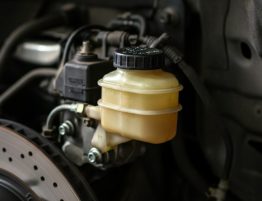
- Check your brake fluid regularly – Low levels can cause ABS faults.
- Watch for dashboard warning lights – Don’t ignore the ABS or BRAKE lights.
- Keep wheel areas clean – Grime and corrosion can block sensor signals.
- Get routine brake service – During a brake pad replacement, we also inspect ABS components.
When to Visit Brakes 4 Less for ABS Service
If you experience any of the following, bring your vehicle in for service:
- ABS light stays on
- Brakes feel “off” or unresponsive
- You notice increased skidding or loss of control
- You want peace of mind before a long road trip
We offer:
- Free brake inspections
- Same-day service when you arrive an hour before close
- Honest pricing, no pressure
- Convenient locations near you
Get a Free Brake Inspection
ABS is one of the most important safety features in modern vehicles. It prevents skids, helps you stay in control, and turns sudden stops into smooth recoveries. If your ABS light is on or your brakes aren’t feeling right, don’t wait.
Stop by Brakes 4 Less for a free brake inspection and let us help you drive with confidence—rain or shine.
__________________________________________________________________________________________________________
Frequently Asked Questions
Q: What is the best way to maintain your ABS system?
A: The best way is to schedule regular brake inspections, keep your brake fluid clean, and address any warning lights promptly to prevent more serious problems.
Q: Is it safe to drive with the ABS light on?
A: Yes, but with caution. Your brakes still work, but the anti-lock function won’t engage. Get it checked soon to avoid dangerous skids in emergency stops.