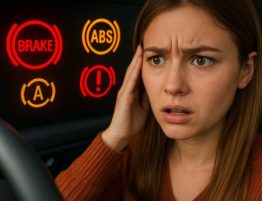

We’ve all heard the old saying, “An ounce of prevention is worth a pound of cure.” And while it might make you think about eating your veggies to avoid visiting the doctor, it applies to plenty of other things in life too—like brake maintenance! But what if prevention didn’t quite make your to-do list, and you find yourself in the stomach-dropping scenario of brake failure while driving? Stay calm, we’ve got you covered with tips that can keep you safe and help you avoid a few gray hairs.
Step 1: Take a Deep Breath
First things first—don’t panic. Losing your brakes is definitely a scary moment, but keeping a clear head is the most important tool you can use in this situation. Take a deep breath and focus on staying in control.
Step 2: Try the Brakes Again
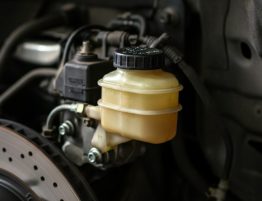
Even if your brakes seem to have failed, it’s worth giving them another shot. Pumping your brakes rapidly might help build up pressure in the brake system, especially if the hydraulic system has a small leak or air bubble. Many newer cars have dual braking systems that might still provide some stopping power, so give it a go before assuming your brakes are completely gone.
Step 3: Use Your Emergency Brake
The name says it all—it’s called an “emergency brake” for a reason! While it won’t stop you instantly (and shouldn’t be yanked suddenly at high speeds), applying the emergency brake gradually can help slow you down enough to safely regain control.
Step 4: Shift into a Lower Gear
If you’re driving an automatic, shift into low gear (L or D1/D2 on most shifters). For manual transmissions, downshift through the gears gradually. Lowering your gear decreases your speed by using the engine to slow the vehicle—a technique known as engine braking.
Step 5: Stay Aware of Your Surroundings
Keep your eyes on the road and stay aware of any vehicles, pedestrians, or obstacles nearby. Use your horn and hazard lights to alert other drivers that you’re experiencing trouble. Look for a safe place to pull over, like a shoulder, grassy area, or upward hill that can naturally slow you down.
Step 6: Steer to Safety
Once your speed is under control, carefully guide the vehicle to a safe location. Avoid sharp turns that could cause you to lose control. If you’re unable to stop completely, aim for soft objects like bushes (as a last resort), rather than something immovable like a tree or pole.
Step 7: Call for Help
After coming to a stop, it’s time to call for assistance. Whether it’s roadside help or Brakes 4 Less (we’ll talk about that in a second), don’t drive the car again until the brake problem has been fixed.
Prevention Is the Best Cure
Now, here’s where that trusty adage fits in perfectly. The best way to handle a brake failure is to prevent it from happening in the first place. Regular brake inspections and maintenance can save you a world of trouble—and possibly save your life.
At Brakes 4 Less, we’re big believers in keeping your braking system in tip-top shape. From our free inspections to our fast, affordable brake services, we make it easy for you to stay on top of your car’s health. Our pricing is simple, our parts are high-quality, and our service is lightning-fast—so why wait?
Don’t Wait for the “Pound of Cure”
Your brakes are too important to put off taking care of. Whether it’s a suspicious squeak, uneven stopping, or just time for a routine check, the experts at Brakes 4 Less are here to help. With thousands of brake jobs handled every month, we know brakes better than anyone else.
No one plans for brake failure while driving, but you can plan for regular maintenance to keep it from happening. Remember, “An ounce of prevention is worth a pound of cure,” and we’re here to keep you safe, affordable, and stress-free on the road.
Stop by any of our convenient locations or give us a call to schedule your service today—because when it comes to brakes, “less” is always more!
FAQ 1: How can I tell if my brakes might fail before it happens?
There are usually warning signs when your brakes need attention. Keep an ear out for squeaking or grinding noises, which could mean worn brake pads. If your car pulls to one side while braking or the pedal feels soft or spongy, it’s time to get your brakes inspected. Taking action early can prevent potential failures down the road.
FAQ 2: Should I drive my car after experiencing brake failure?
No, it’s not safe to drive your car after a brake failure. Even if the issue seems resolved, there could be underlying problems that put you at risk. Call for roadside assistance or have your car towed to a brake specialist like Brakes 4 Less. They’ll inspect your braking system to identify and fix the issue, so you can drive with confidence again.