Brake warning lights aren’t just dashboard decoration—they’re urgent messages from your vehicle that something may be wrong with your braking system. Whether you’re a daily commuter or an occasional driver, knowing what each light means (and what to do next) can save you time, money, and potentially prevent an accident.
At Brakes 4 Less, trusted brake service specialists in the Southeast, we believe understanding your dashboard lights is just as important as the repairs themselves.
Let’s walk through what these lights mean, how to react, and when to schedule service.
What Is a Brake System Warning Light?
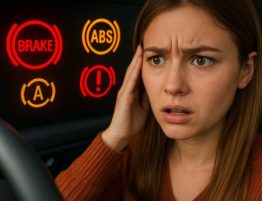
A brake system warning light is a dashboard indicator designed to alert you to issues in your braking system. These lights typically appear in red or amber and may include the words “BRAKE,” “ABS,” or icons like circles with exclamation points or dotted lines.
A brake system warning light signals problems with your vehicle’s braking system—like low fluid, worn pads, or ABS failure—that require immediate attention.
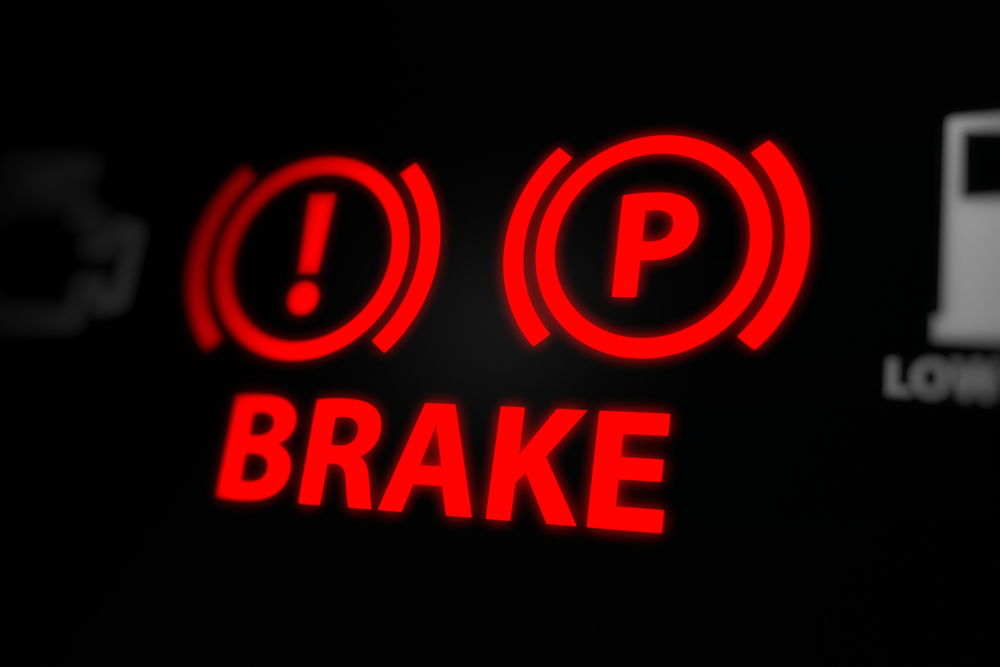
1. The Red “BRAKE” Warning Light
What it means:
This red light often indicates that your parking brake is engaged or that there’s a more serious problem with your hydraulic braking system.
What to do:
- First, release your parking brake.
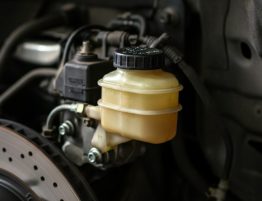
- If the light stays on, check your brake fluid level.
- Still on? It’s time for a professional free brake inspection.
Did you know?
Brake fluid doesn’t evaporate on its own. If it’s low, there’s likely a leak or your brake pads are dangerously thin—both are red flags that need expert attention.
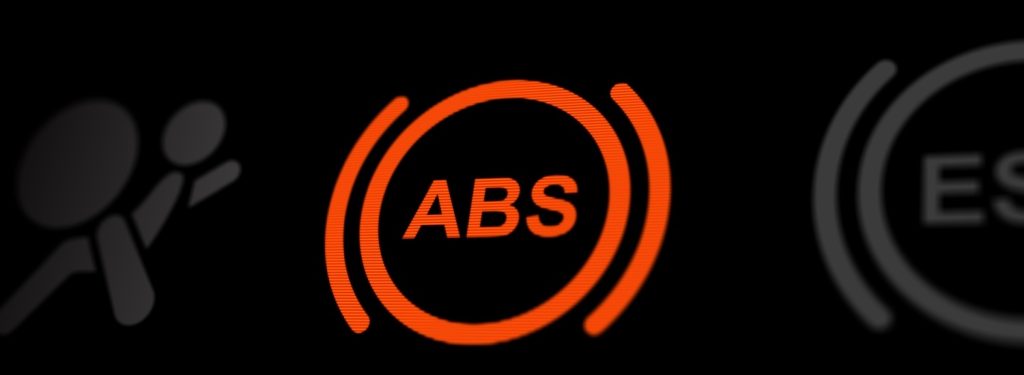
2. The ABS (Anti-lock Braking System) Light
What it means:
This amber light tells you the ABS system isn’t working properly. The brakes will still function, but your anti-lock safety feature is disabled.
What to do:
Drive with caution, especially on slick roads. ABS issues are often related to sensors or control modules and should be diagnosed soon to avoid skidding during sudden stops.
3. Brake Pad Wear Indicator Light
What it means:
If your vehicle has this feature, it’ll activate when your brake pads are worn below a safe limit. This icon often looks like a circle surrounded by dashed lines.
What to do:
Schedule a brake pad replacement right away. Continuing to drive with worn pads can damage your rotors and significantly increase repair costs.
Pro tip:
Brakes 4 Less includes pad inspection in every free check-up—so you’ll always know your brake health before it becomes a problem.
4. Brake Fluid Warning Light
What it means:
This usually indicates low brake fluid—a critical issue that compromises your car’s ability to stop.
What to do:
Top off the brake fluid if you’re confident doing so, but this is only a temporary fix. A leak or moisture contamination can cause long-term system damage. Always follow up with an inspection.
Did you know?
Brake fluid absorbs moisture over time. This can lead to internal corrosion and brake failure, which is why it’s smart to flush it every 2 years, 30,000 miles, or at every brake job—whether or not you see a warning light.
5. Parking Brake Light
What it means:
It’s a reminder that your parking brake may still be engaged, or the sensor may be malfunctioning.
What to do:
Release the brake fully and check again. If the light stays on, have it checked during your next service visit.
Quick Brake Warning Light Reference Table
| Warning Light | What It Means | What You Should Do |
| Red “BRAKE” Light | Parking brake engaged or fluid/system issue | Check fluid, release brake, get inspected |
| ABS Light | Anti-lock braking system malfunction | Avoid hard braking; schedule diagnostic |
| Brake Pad Light | Brake pads are excessively worn | Replace brake pads immediately |
| Brake Fluid Light | Brake fluid is dangerously low | Top off & book a service appointment |
| Parking Brake Light | Brake still engaged or faulty sensor | Fully release; get sensor checked |
When to Pull Over Immediately
Pull over safely and call for a tow if you notice:
- A soft or sinking brake pedal
- Grinding, squealing, or burning smells
- Your vehicle pulling to one side while braking
These symptoms suggest your brakes are no longer functioning safely.
Don’t Ignore the Signs—Visit Brakes 4 Less
Brake warning lights are your car’s first defense against danger. Ignoring them can lead to serious damage and risk. At Brakes 4 Less, we make it easy and affordable to stay on top of your brake system.
We offer:
- Free brake inspections
- Same-day service (when you arrive an hour before close)
- Transparent pricing
- Locations across five states
With locations across South Carolina, Georgia, and beyond, there’s a Brakes 4 Less near you—ready to get you back on the road safely.
Frequently Asked Questions
Q: What is the best way to respond to a red brake warning light?
A: The best response is to check your parking brake and brake fluid. If the light stays on, schedule a brake inspection immediately. Ignoring it could lead to brake failure.
Q: Can low brake fluid cause the ABS light to come on too?
A: Yes. In many vehicles, low brake fluid affects the ABS system, which can trigger the ABS warning light along with the red brake light.
Final Thought
Brake warning lights are never something to brush off. They’re your car’s way of keeping you informed and protected. So, the next time one flicks on—don’t panic. Just stop by Brakes 4 Less for a free brake inspection, and we’ll take care of the rest.